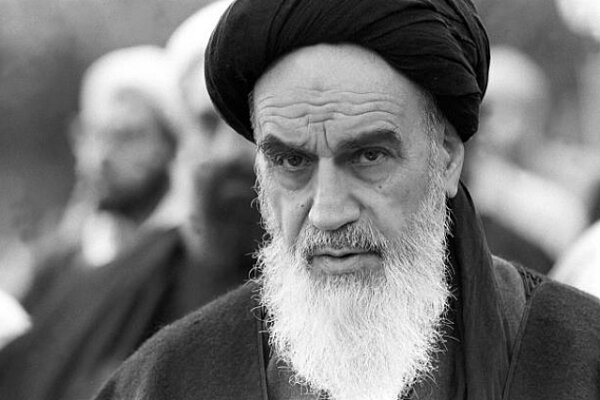

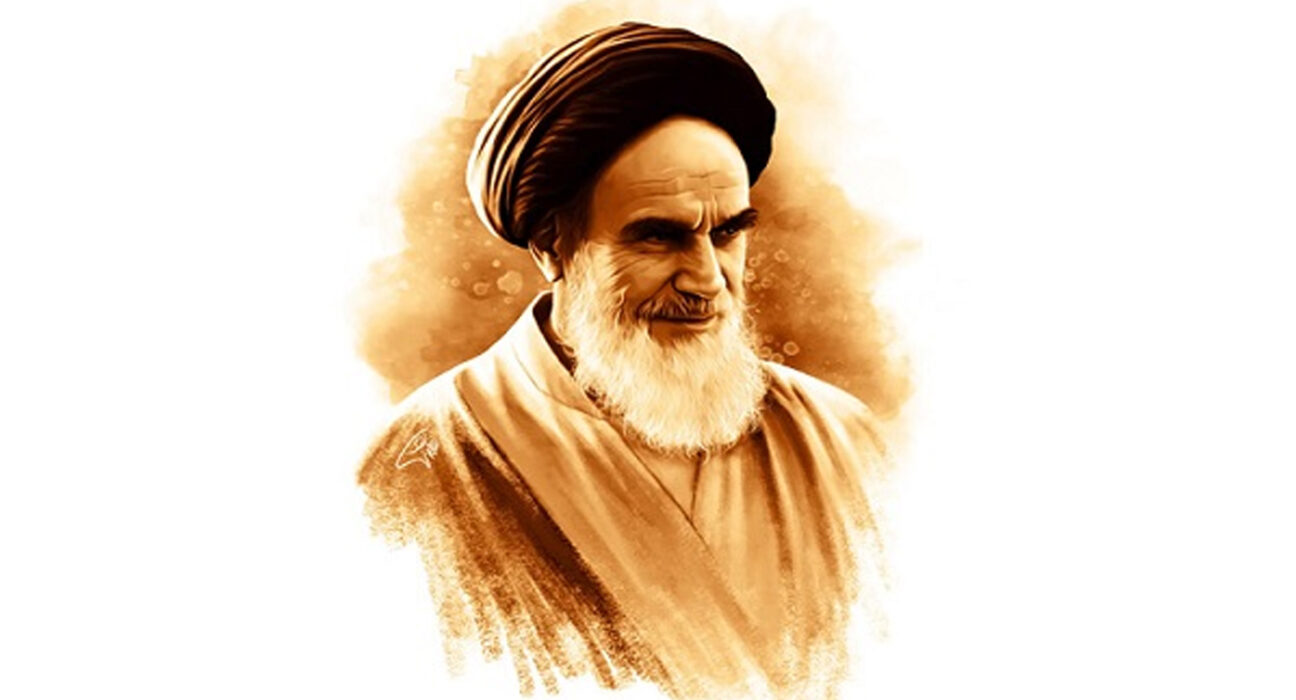
Sayyed Ruhollah Mousavi Khomeini, known as Imam Khomeini, was the leader of the Islamic Revolution and the founder of the Islamic Republic of Iran, and one of the leading scholars of the Shia Islam.
From 1341, he openly fought against the Shah Pahlavi monarchy in Iran. The government at the time arrested him twice, and the second time exiled him to Turkey and then to Iraq. For 13 years in religious institutions, he was the leader of the revolutionary struggle, and he also taught and authored in religious schools. He returned to Iran on the 12th of Bahman, 1357, with the popular struggle expanding. After the victory of the revolution on the 22nd of Bahman, 1357, he served as the leader of the Islamic Republic of Iran until his death on the 13th of Khrodad, 1368.
The theory of absolute power of Wilayat al-Faqih is the most important among the major theories of jurisprudence and politics based on Shia faith. Imam Khomeini attempted to define the form of government of the Islamic Republic and its constitution according to this theory. According to Imam Khomeini, governance is the practical philosophy of all jurisprudence. His perspective on governance in relation to jurisprudence led him to emphasize the preservation of traditional jurisprudence frameworks while incorporating modernization into jurisprudence. His theory of the role of time and place in religious judgment, and some of his influential religious rulings, are considered a result of this view.
Muslims, especially Shia Muslims worldwide, greatly admire him. His burial, attended by approximately ten million people, is considered the most crowded funeral in the world. Every year, on the anniversary of his death, a ceremony is held at his grave, attended by prominent political and religious figures.
Besides jurisprudence, Islamic philosophy, and theoretical principles, Imam Khomeini was also a thinker and author. He was also one of the leading scholars and teachers of ethics. During his time as a teacher in Qom, he taught ethics at the Faisiyah School. Throughout his life, he lived a simple and humble life.
Sayyid Ruhullah Mousavi Khomeini was born on the 1st of Mehr, 1281, in Khomein, near Arak, Iran. His father, Sayyid Mustafa Mousavi, studied at a religious institute in Najaf and was a leading figure in religious affairs for the people of Khomein. He was killed five months after Khomeini’s birth in a battle with local rulers. Imam Khomeini was raised by his mother, Hajareh Agha Khanam, and his aunt until he was 15 years old.
Prior to the Islamic Revolution, Iran’s system of government was a constitutional monarchy, which in practice had become an absolute monarchy due to continuous opposition to both Pahlavi kings. The system’s policies were sometimes incompatible with the fundamental principles of Islam and Shia Islam, leading to protests from religious followers, and especially religious scholars.
The first movement
Imam Khomeini’s open and formal protest against the monarchy began with a statement in 1341. After the draft of the State Association Act was approved, a meeting was held on the 16th of Mehr, 1341, attended by Imam Khomeini and the religious leaders of Qom. This led to the issuance of a statement by Imam Khomeini and other religious scholars.
On the 11th of Osar, 1341, the letters of approval from the state and provincial associations in support of Imam Khomeini’s struggle were revoked. He issued a statement to end this turmoil.
In 1357, the Iranian people’s revolution achieved victory. Imam Khomeini returned to Iran on the 12th of Bahman that same year, and on the 22nd of Bahman, the monarchy was officially defeated. A few months later, in Farwardeen 1358, the Islamic Republic was decided through a referendum, and subsequently, a constitution was drafted by experts elected by the people and put to a vote. According to this constitution, Imam Khomeini was elected leader of the Islamic Republic. He led the Islamic Republic until his death in Khorad 1368. His most significant achievements during this ten-year period included stabilizing the Islamic Republic of Iran, drafting the constitution, managing internal conflicts, commanding the war during the eight-year Iraqi invasion of Iran, accepting peace with Iraq, amending the constitution, etc.
Imam Khomeini died on the evening of the 13th of Khorad, 1368, at the age of 87 from stomach cancer in Tehran. His body was laid in state at the Tehran Mosque on the 15th of Khorad, and people gathered to bid him farewell. Sayyid Muhammad Rida Kulpaiqani, a leading Shia scholar, performed the Janazah prayer for his body on the 16th of Khorad, which was attended by approximately 9 million people. His body was then buried near the Beheshti Zahra cemetery, later known as the Haram of Imam Khomeini. The official Guinness World Records website states that the procession of Imam Khomeini’s body was the most crowded funeral in history, considering the percentage of the population; one-sixth of the Iranian population.
The 14th of Khordam is a public holiday in Iran commemorating the anniversary of Imam Khomeini’s death. Various ceremonies are held at Imam Khomeini’s shrine, attended by citizens and national officials. The Leader of the Islamic Republic of Iran also delivers a speech on this day.