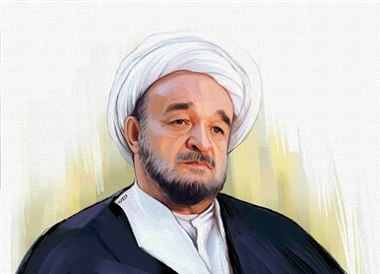

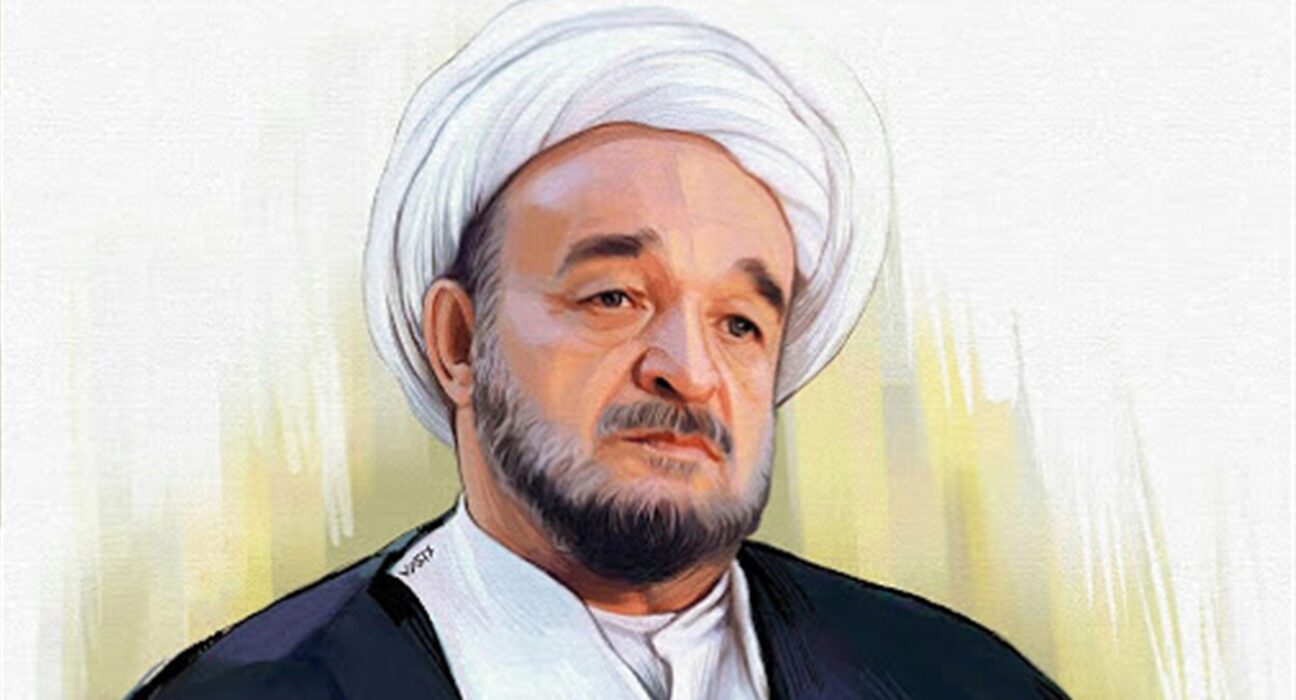
Muhammad Taqi Ja’fari, also known as Allamah Ja’fari (1377-1302), was one of the leading Shi’a scholars of the 15th century Hijra. He was a philosopher, theologian, jurist, and scholar of Usul (Islamic studies). He was a student of Ayatollah Murtada Tareqani. He dedicated his life to studying, teaching, and researching. He authored more than 80 books, with his most famous works being “The Beliefs Concerning Predestination and Free Will,” and “Commentaries on Nahj al-Balaghah,” as well as “Commentaries on Masnawi, Ma’nawi, and Wijdun.”
Allamah Ja’fari was born in 1302 or 1346 AH in the Jamsheed Abod district of Tabriz. His father’s name was Karim, who was illiterate.
Allamah Ja’fari learned reading, writing, some basic lessons, and the Quran from her mother. She attended the I’timad school in Tabriz at the age of six. While in the fourth and fifth grades, she memorized the content of “Kalilah and Demeneh.” She then enrolled in the Talebiyeh school in Tabriz with her younger brother and began studying religious subjects with a teacher there. The cost of living meant she had to study in the mornings and work in the afternoons.
In 1319, he traveled to Tehran to continue his studies. Initially, he studied at the Firuzuf al-Dawlah school, located next to Imam Zadeh Ismail’s school. He then studied various subjects such as the Makazib, Kifayah, Hikmat, Mansuh, and some chapters of Asfar at the Marwi school. He moved to Qom in 1322 and resided at the Dar al-Shifa school. Sayyid Hujjat Quhkmari and Muhammad Saduqi bestowed upon him a set of religious scholar’s robes.
Allamah Ja’fari entered advanced religious studies in 1363 AH. He traveled to Najaf, Iraq, at the age of only 23. He received permission to adjudicate religious issues from Ayatollah Muhammad Qassem Shirazi. He was also educated in ethics by Ayatollah Murtada Taleqani. In 1336 or 1337, after spending 11 years in Najaf, he returned to Iran and resided in Mashhad for over a year. He studied, taught, and researched in Tehran until the end of his life. He was highly proficient in Arabic and English.
For 50 years, Allamah Ja’fari dedicated himself to scholarship and research. In 1376, Sayyid Muhammad Khatami, the then president, bestowed upon him the number one academic award.
Allamah Ja’fari passed away on the 25th of Abon, 1377. Ayatollah Abdullah Jawadi Amuli led the funeral prayer for him. His body was buried in the shrine of Imam Reza at Dar al-Sud in Mashhad. Ayatollah Khamenei, the Supreme Leader of Iran, issued a statement expressing his condolences on his passing