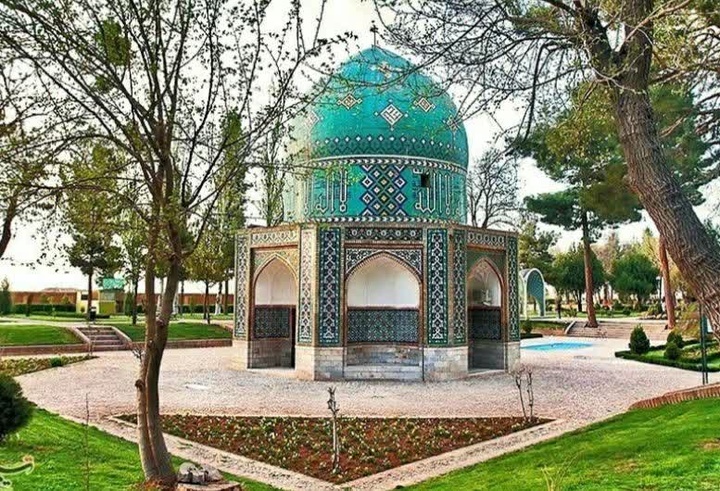
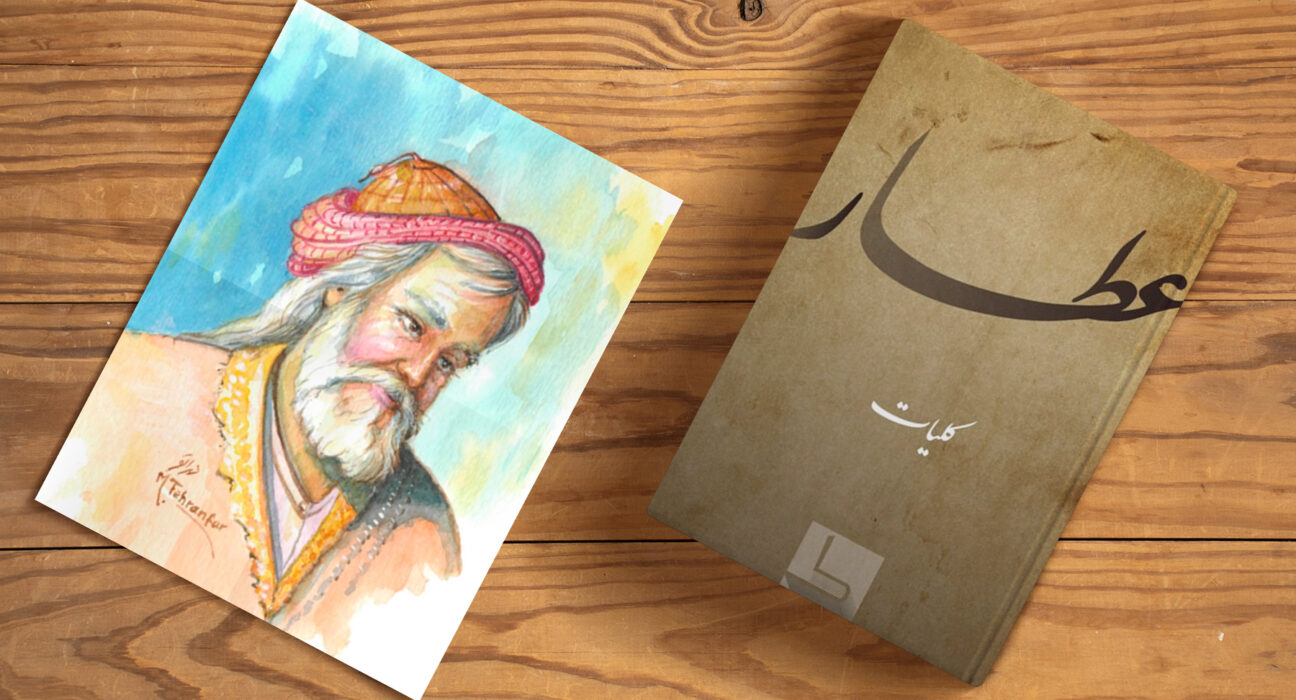
At-Tar al-Neshaburi was a poet and mystic in the 6th and 7th centuries, following the lunar calendar. He was proficient in various fields such as the Quran, Hadith, Jurisprudence, Tafsir, medicine, astronomy, and theology.
At-Tar has many poems about the virtues of the Caliph, showing that he belonged to the Ahl al-Sunnah school of thought. However, he also composed many poems praising Ali and Ahl al-Bayt (A.S.), to the point that some thought he was a Shia.
Elahinameh Asrarnameh, Khosrownameh are among Attar’s works, and Tazkira al-Awliya is his only prose piece. The 25th of Farward is designated as the national day of remembrance for Attar Nayshaburi in the Iranian calendar.
Attar Naishbouri was an Iranian poet and mystic of the 6th and 7th centuries AH. Complete information about his life is lacking. He was born in 540 AH in the Kadkan region near Naishbouri. He was captured and held prisoner by Mongol soldiers in Naishbouri and killed in 617, 618, or 627 AH.
His father was a herbalist, and Attar followed in his father’s footsteps. He traveled to India, Iraq, Syria, and Egypt in search of knowledge, and returned to Nayshabur, where he lived until his death.
There is debate regarding the sectarianism (madhhab) of At-Tar. Contemporary literary scholars Muhammad Rida Shafi’i and Qadqani believed At-Tar belonged to the Sunni sect, but he had a special devotion to the Prophet’s family (peace be upon him). At-Tar composed numerous poems praising the virtues of the Caliphs Abu Hanifa and Shafi’i. However, his descriptions of the virtues of Imam Ali (a.s.) and Ahl al-Bayt (a.s.) in his works have led some to consider him a Shi’a. Qadi Nurullah Shushtari considered At-Tar a highly sincere Shi’a, while Allamah Tehrani, in his book “The Oneness of God,” citing At-Tar’s own words, considers him to be of the Shi’a sect.
Attar’s works include:
Poetry works: Elahinameh Asrarnameh Javahernameh Khosrownameh Sharh al-Qalb Musibat-Ameh Mantiq al-Tayr, Poetry book Mukhtarnameh
One of At-Tar’s most famous works of prose is Tazkira al-Awliya, written in prose. This book contains stories and sayings, passed down through mystics, of Imam Sadiq (a.s.)’s pronouncements on Mansur Hallaj, concluding with a brief mention of Imam Baqir (a.s.), and also mentions other figures such as Abu Hanifah Shafi’i and Ahmad bin Hanbal.