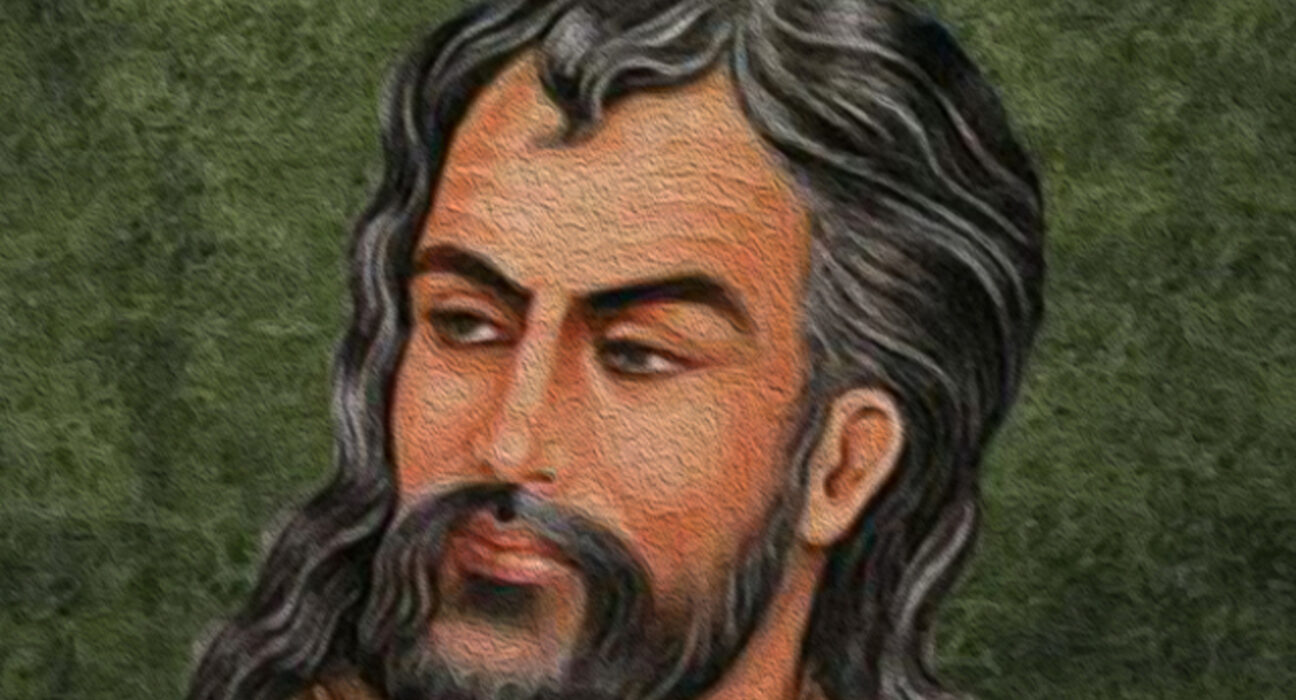
Khajaw Shamsuddin Muhammad bin Baha’uddin Muhammad Hafiz Shirazi (born 727 – died 792 AH), known only as Hafiz, was an Iranian poet. Most of his poems are in the form of quatrains. It is known that Hafiz adopted the speaking style of Khajawi Gremoni, and his speeches bear a striking resemblance to Khajawi’s poetry.
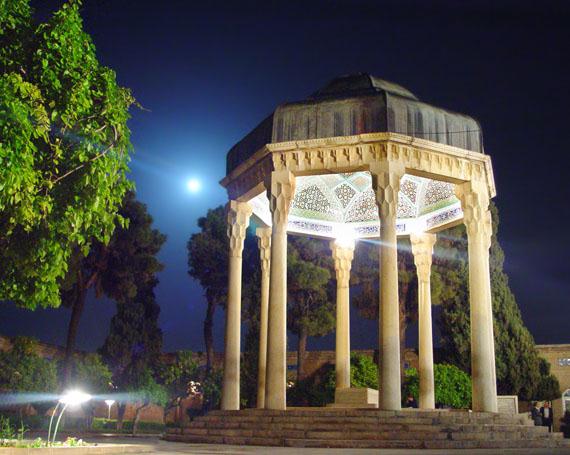
Hafiz is known as one of the most influential Persian poets of the 18th and 19th centuries. His poems were translated into European languages, and his name entered the literary circles of the Western world. Every year on the 20th of Mihr, a memorial service for Hafiz is held at his mausoleum in Shiraz, with researchers from all over the world participating. In the official Iranian calendar, the 20th of Mihr is called the Day of Remembrance for Hafiz.
In his poems, Hafiz describes his schooling, his academic studies, both morning lessons and memorizing the Quran. Hafiz’s reputation led rulers from both near and far lands to summon him. Throughout his life, he interacted with many sultans and elders, and also met with scholars, literary figures, and poets. Hafiz did not consider any sin more serious than deceiving people and boasting; he often criticized those who claimed credit for his poems.
The Quran undoubtedly influenced Hafiz. His poetic revolution, a form of free-form poetry influenced by the Quranic structure, simultaneously connected ancient Iranian culture with Islamic culture, incorporating religion, theology, philosophy, and mysticism, culminating in his poetry.
During his lifetime, Hafiz’s reputation for poetry spread to other lands, such as the Indian subcontinent, and poets there attempted to emulate his poetic style, blending romantic and mystical themes and utilizing his signature literary techniques. In the Arabic language, Hafiz was second only to Omar Khayyam in influence.
Divan Hafiz is a book of poems by Hafiz that includes all of his surviving works. Most of these poems are in Persian.
The Diwan of Hafiz, after Hafiz’s death, may have been compiled by Muhammad Qultam. Some unconfirmed reports state that Hafiz revised his Diwan in 770 AH, meaning twenty years before his death, but no such manuscript exists. However, several known manuscripts exist in Iran, Europe, and other places, dating from the second and third centuries of the 15th century, that is, 30 to 60 years after the poet’s death.