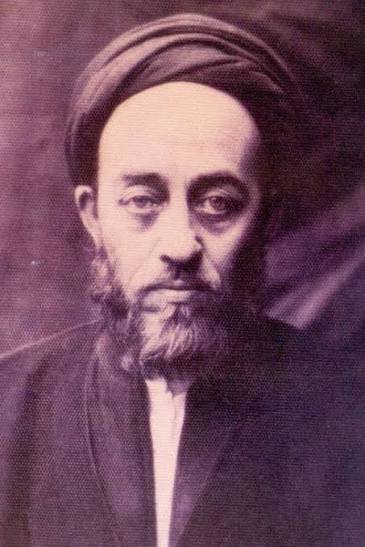
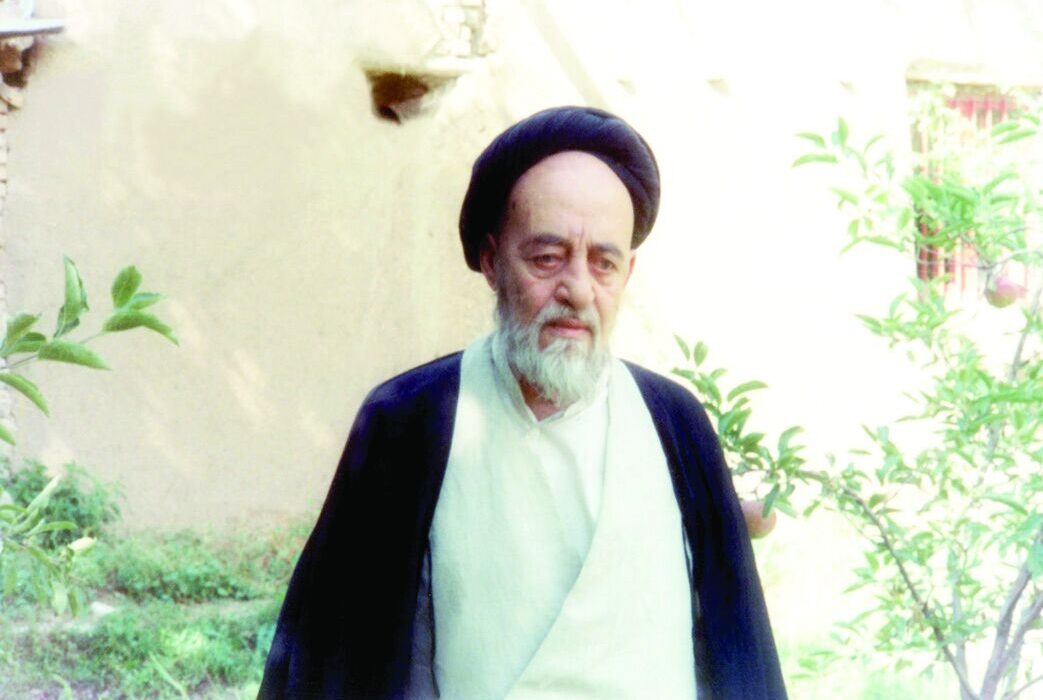
Sayyid Muhammad Hussein Tabataba’i, known as Allamah Tabataba’i, was an Iranian Shia tafsir (commentator), philosopher, usul (religious scholar), jurist, mystic, and religious scholar. He taught at a religious institute in Qom and is considered one of the most influential Shia religious scholars of Iran in the 14th century.
biography
The life of Allamah Tabatabai can be divided into four periods: childhood and adolescence spent in Tabriz; education at the religious institute in Najaf, returning to Tabriz to work in agriculture; and the period spent in Qom, teaching, writing, and spreading religious teachings.
Childhood and adolescence
Sayyid Muhammad Hussein Tabataba’i was born in 1281 in the village of Chodbod Mashayk, on the outskirts of Tabriz. He lost his mother at the age of 5 and his father at the age of 9. His father’s representative, his older brother Muhammad Hasan Ilahi Tabataba’i, sent Allamah Tabataba’i to religious school. He studied the Quran and Persian literature from 1290 to 1296, and then pursued religious studies from 1297 to 1304.
Studied in Najaf.
After entering the Talabiyah religious school of Tabriz Allamah Tabataba’i, he traveled to Najaf with his brother and studied religious sciences for 10 years in Najaf. He studied mathematics in Najaf with Sayyid Abul Qassem Mousavi Khuntari. He studied Fiqh and Usul with Muhammad Hussein Na’ini and Muhammad Hussein Gharwi Isfahani.
His philosophy teacher was Sayyid Hussein Bodkhubei, with whom he studied for many years in Najaf. He also studied theology, Quran scrutiny, philosophy, ethics, and Hadith fiqh with Sayyid Ali Qadi Tabataba’i, and received guidance in mystical arts from him.
Back to Liver Reese.
While studying in Najaf, due to poor economic conditions and lack of income from his agricultural property in Tabriz, he returned to work in agriculture in the village of Shod-Abod in Tabriz for 10 years. His son, Sayyid Abdul-Baqi Tabatabai, stated that in the 10 years after Allamah Tabatabai returned from Najaf to Shod-Abod, he cleaned drainage ditches, renovated dilapidated gardens, planted new trees, and simultaneously created several new gardens and built a summer house in the village for his family.
Life in the city of Kum
After spending some time in Tabriz, Allamah Tabataba’i decided to settle in Qom in 1325. Allamah Tabataba’i’s son recounted that they initially stayed with relatives, and later rented a house with one room divided into two sections, totaling approximately twenty square meters.
The work of Allamah Tabataba’i.
Allamah Tabataba’i has many works, but some are more famous and have garnered more attention than others.
The first work is Tafsir al-Mizan, a 20-volume Arabic text. This Tafsir employs the method of “interpreting the Quran with the Quran.” Beyond interpreting verses and explaining their etymologies in separate sections, it also includes commentary on history, theology, philosophy, and society related to the topics of the verses. This work was published in two forms: 1. A forty-volume Tafsir, later reduced to 20 volumes. 2. This work was translated into Persian by Sayyid Muhammad Baqir Mousavi Hamdani.
Another of his important works is “Principles of Philosophy and Realism.” This book comprises 14 philosophical essays written during the 1320s and 1330s, delivered by Shahid Mutahari using comparative philosophical approaches. It is one of the first and most important books to analyze various philosophical issues, drawing upon the approaches of both Islamic and modern Western philosophy.
Died
Allamah Tabataba’i passed away on the 25th of Aban 1360. Ayatollah Seyyed Muhammad Rida Kulpaikani, one of the Shi’a Marja’ al-Taqlid, led the funeral prayer for him. His body was buried in the Haram of Ma’sumah.